
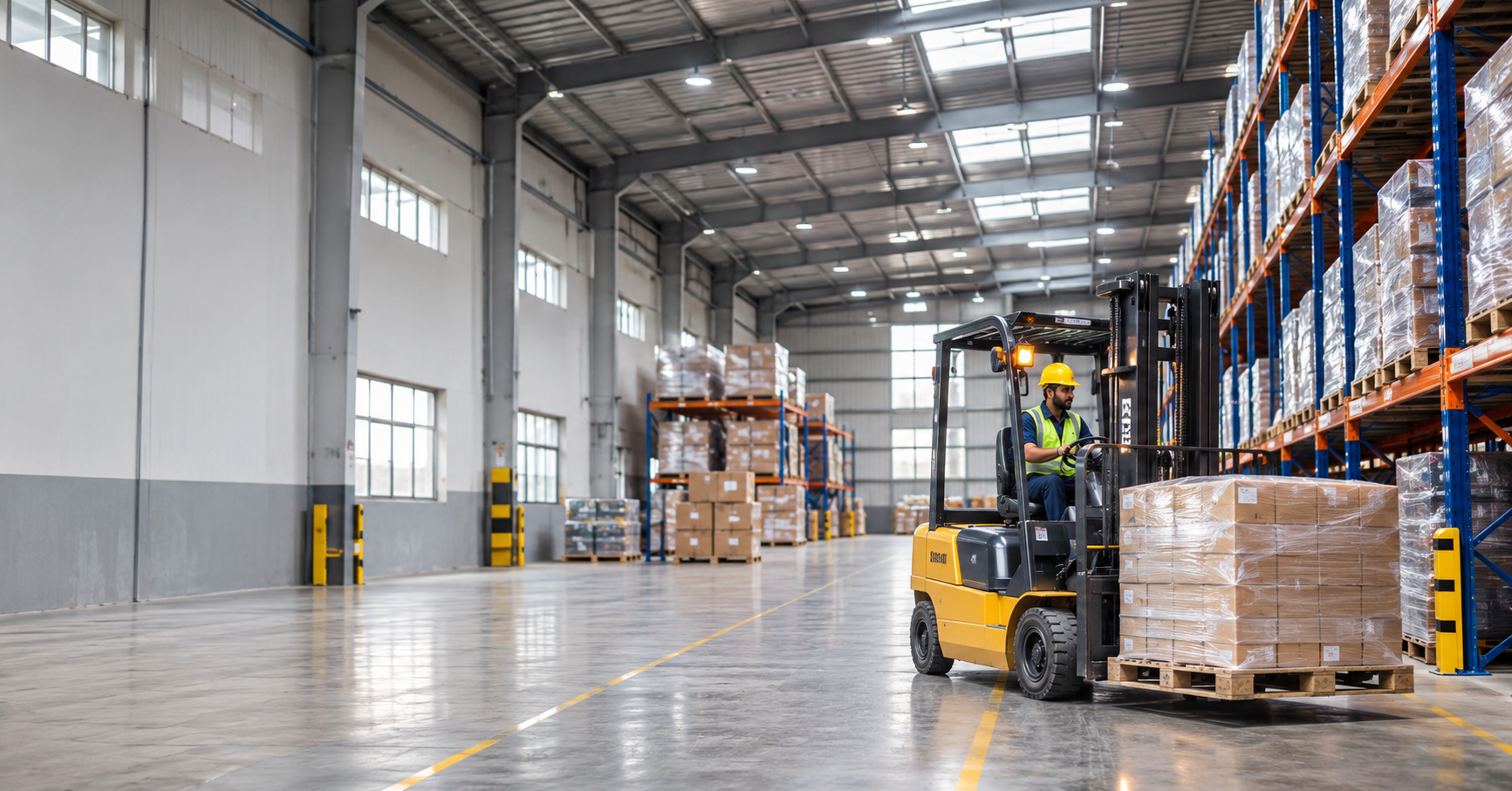
Duty-free warehousing in India usually means storing imported goods in a Free Trade and Warehousing Zone (FTWZ), where customs duty is not paid up front. Here is how it works, what "duty free" really means, and the questions to ask a provider before you start.
If you import goods into India, you have probably seen the phrase "duty-free warehousing". It sounds simple, but it can mean different things, and the details decide whether the arrangement actually helps your cash flow. This guide explains the idea in plain language, shows where duty is paid and where it is not, and gives you a checklist of questions to ask before you choose a provider.
What does duty-free warehousing mean?
In everyday use, duty-free warehousing means keeping imported goods in a customs-controlled warehouse without paying customs duty when they arrive. In India, the two main options are a traditional bonded warehouse and a Free Trade and Warehousing Zone. Both let you hold goods under customs control, but they work differently. Our comparison of FTWZ vs bonded warehouse explains the differences in detail.
An FTWZ is a type of Special Economic Zone built for trading and warehousing. Goods can be imported into the zone, stored, lightly processed, and then sent out again. You can read the full overview on our What is an FTWZ page.
"Duty free" does not always mean "no duty ever"
This is the most common misunderstanding. The phrase "duty free" suggests you never pay duty, but what usually happens is that duty is postponed. A more accurate description is duty deferment. What you pay, and when, depends on what happens to the goods next:
- Goods that stay in the zone: no customs duty is due while they remain there.
- Goods that are re-exported: they leave India, and no Indian import duty is charged on them.
- Goods cleared into India: duty and applicable taxes are payable on the lot that is released into the Domestic Tariff Area (DTA), meaning the rest of India outside special zones.
So the real benefit is timing and flexibility, not a permanent exemption for goods you sell in India. We explain the timing effect in our guide to duty deferment warehousing in India, and the clearance step in Domestic Tariff Area Operations.
How duty-free warehousing works, step by step
- Your shipping documents name the zone. The cargo is booked with the FTWZ as its destination, so duty is not paid at the port.
- The cargo moves from the port to the zone. It travels under customs control to the warehouse.
- The goods are received and recorded. They are checked against the documents and entered into the stock records.
- The goods are stored. Light work such as labeling, kitting or repacking can often be done while they are in the zone.
- You choose the exit. The goods are re-exported, moved to another zone (see our guide to zone to zone transfer), or cleared into India with duty paid on the lot you release.
For a practical walk-through of the storage stage, read How to Store Imported Goods in an FTWZ.
Who benefits most from duty-free warehousing?
It tends to suit businesses where the time between landing the goods and selling them is long, or where only part of the stock ends up in India. Typical examples include:
- Importers with slow or uneven sales, who would otherwise pay duty on a full container and wait months to sell it.
- Traders who re-export part of their stock and want to avoid Indian import duty on that share.
- Businesses that buy from several countries and combine shipments before dispatch.
- Distributors who supply Indian customers in small lots and want to clear stock as orders arrive.
It is less useful if your goods sell within days and in full, because the timing benefit is small. Our post Is an FTWZ Right for Your Business? helps you decide, and 7 Ways an FTWZ Improves Cash Flow for Importers covers the cash flow effect.
Questions to ask any provider before you start
Not all duty-free warehousing is the same. Before you commit, ask each provider:
- Where is the facility? How far is it from the ports your cargo arrives at?
- How is my stock tracked? Can I see quantities and locations in real time?
- Can I clear goods in small lots? Or do I have to release the whole shipment at once?
- What is included in the price? Storage, handling, documentation, transport and insurance can be charged separately.
- Who prepares the customs filings? And what do you need from me, and by when?
- What are the operating hours? Can goods be received and released at night or on weekends?
- What goods can you store? Do you have the conditions my goods need?
- How do you handle the exit? How quickly can goods be re-exported, transferred or cleared?
- What are the current storage rules? Time limits and conditions are set by regulation and can change, so ask what applies today.
Common mistakes to avoid
- Assuming duty is never paid. Goods cleared into India are charged on the lot released.
- Not planning the exit. Decide early whether goods will be re-exported, sold in India, or both.
- Mismatched documents. The invoice, packing list and shipping papers must match the cargo exactly.
- Comparing only the storage rate. Look at the full cost, including documentation, handling and transport.
- Not asking about partial clearance. Being able to release stock in small lots is a big part of the benefit.
How this works at Yimpilo
Our FTWZ unit is in Ponneri, North Chennai, with 50,000+ sq ft of warehousing and round-the-clock warehouse operations. It is about 10 km from Kattupalli port, 11 km from Ennore port and 30 km from Chennai Port (distances are approximate). Our in-house team prepares customs filings, and you can release stock in lots as your orders arrive. Read more about our FTWZ warehouse operations, our FTWZ in Chennai and our customs and compliance support.
Frequently asked questions
Is duty-free warehousing the same as a bonded warehouse?
They are similar but not the same. Both hold goods under customs control without duty up front. An FTWZ is a type of Special Economic Zone with its own rules and benefits, such as re-export without Indian import duty. See our comparison of FTWZ vs bonded warehouse.
Do I pay duty if I re-export the goods?
Indian import duty is not charged on goods that are re-exported from the zone. Export paperwork is still needed, and the details depend on your goods, so confirm them with your customs broker.
Can I clear only part of my stock?
Yes. Goods can be cleared into India lot by lot, and duty is paid only on what you release. The rest stays in the zone.
How long can goods stay in the zone?
Storage periods and conditions are set by regulation and can change. Confirm the current position for your goods with your customs broker before planning a long hold.
Do I need to be in Chennai to use your FTWZ?
No. Businesses elsewhere in India and abroad use our zone to hold stock for the Indian market or for re-export.
What to do next
If you are comparing options, start with our FTWZ overview and FTWZ warehouse pages. When you are ready to talk through your goods and your plans, contact our team. This article is general information, so please confirm details for your own shipment with your customs broker or our experts.
Related reading
- FTWZ vs SEZ: What Is the Difference and Which Do You Need?
- How to Store Imported Goods in an FTWZ: A Step-by-Step Guide
- 7 Ways an FTWZ Improves Cash Flow for Importers in India