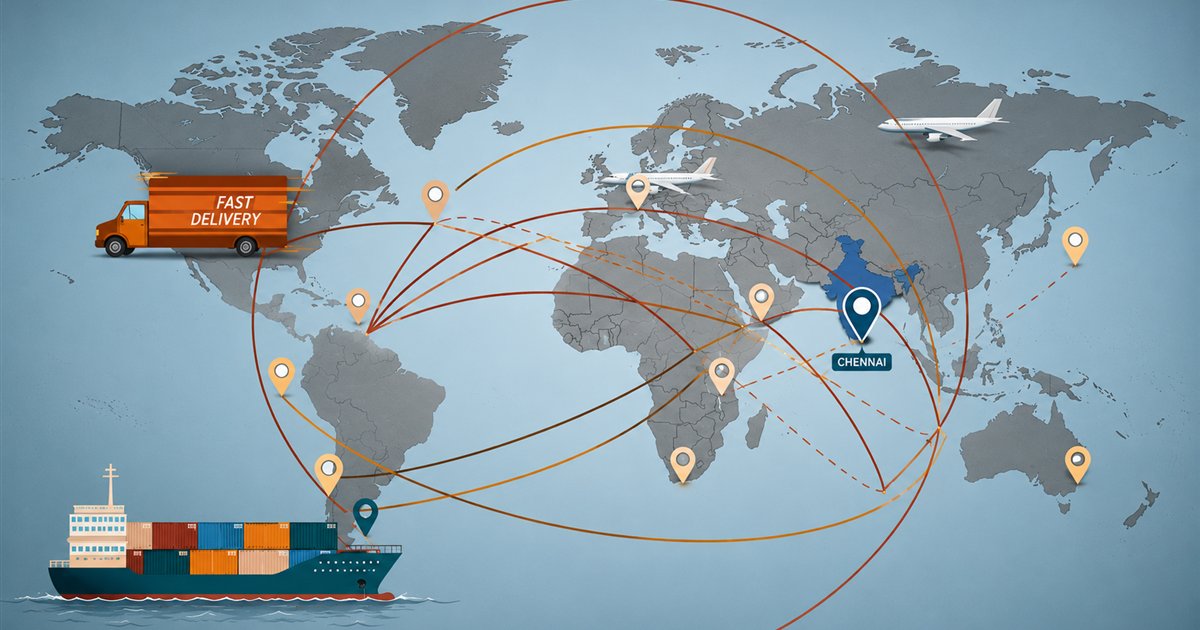
Looking for an FTWZ in Chennai? Our Free Trade Warehousing Zone unit in Ponneri sits close to the Chennai region's major ports, which makes it a practical base for importers and exporters.
When you choose where to store imported goods, location is not a small detail. It affects how long cargo sits between the port and the warehouse, how much you spend on trucking, and how quickly you can deliver to customers. This article explains why the Chennai region is a strong choice for a Free Trade Warehousing Zone, what our Ponneri unit offers, and how to judge any FTWZ location when you compare options.
Why the location of an FTWZ matters
Every day goods spend moving between the port and the warehouse is a day of transport cost and handling risk. A zone that is close to the port reduces both. It also makes planning easier: trucks have shorter, more predictable trips, and you can bring goods in and out of the zone more frequently without large cost per trip. For businesses that move goods often or in smaller lots, this adds up.
Chennai as a trade gateway
Chennai is one of India's major trade and manufacturing regions. The area has a long-standing base of automotive, electronics and general manufacturing companies, and it handles a large volume of import and export cargo through its ports. For an importer, being near that ecosystem means access to suppliers, customers, truckers, customs brokers and service providers without long travel.
Where our unit is
Yimpilo's FTWZ unit is at NDR Infrastructure, Nandiambakkam Port Road, Ponneri, Chennai. Our registered office is in Parrys, Chennai. You can see the facility details on our FTWZ locations and infrastructure page.
Close to the main ports
The Ponneri location is near the Chennai, Ennore and Kattupalli ports. This means cargo landing at any of these ports does not have to travel far to reach the warehouse. Shorter trips mean lower handling time and transport cost, and a lower chance of delay on the road. Ask your freight partner to quote the exact trip from your port of arrival, and compare it with other options.
Good for manufacturing and automotive supply chains
The Chennai region has a strong base of auto and manufacturing businesses. Parts and components can be held in the zone and released as the production line needs them, which supports just-in-time supply. Because duty is deferred until release, you do not need to pay duty on parts that are still waiting in storage. See our automotive logistics solutions and our industrial machinery and project cargo services.
What you can do from this location
- Store imported goods with duty deferment.
- Re-export goods to other countries, or clear them into India in lots.
- Use value added services such as labeling, kitting, repacking and quality checks.
- Combine shipments from different countries before dispatch.
- Arrange freight, customs clearance and delivery through one provider. See freight forwarding and customs and compliance.
How to compare FTWZ locations
Whichever zone you consider, check these points:
- Distance from your usual port of arrival and the trucking cost that follows.
- Road and rail access to your main customers or factories.
- Facilities that match your cargo, for example covered storage, temperature control or space for oversized items.
- Security and systems, including stock visibility and records.
- Services on site, such as customs support and value added work.
- Room to grow if your volumes increase.
Which businesses benefit most from a Chennai FTWZ
- E-commerce and electronics importers supplying south India.
- Automotive and engineering companies that need parts on a schedule.
- Traders who re-export to nearby markets.
- Importers of machinery and project cargo for plants in the region.
A typical journey: port to zone to customer
- Your cargo lands at the Chennai, Ennore or Kattupalli port, with the zone named as its destination.
- It moves by road to the Ponneri unit under customs control, with no import duty paid at the port.
- The goods are received, checked and recorded, and any labeling or repacking is done.
- When a customer orders, you release the quantity needed. Duty is paid on that lot if it is for the Indian market.
- The goods go to your customer by road, or are sent onward to another country without Indian import duty.
Planning your first shipment to the Ponneri unit
If you are new to the zone, a few steps make the first shipment easy:
- Tell us your supplier, the goods, the port of arrival and the expected arrival date.
- Share the shipping documents early, so the filings can be prepared before the cargo lands.
- Agree how the goods will leave, whether for the Indian market, for re-export, or both.
- Start with one product or one shipment, and review how it went before moving more stock.
Questions to ask about transport
Ask who arranges the trucking from the port, what the trip costs, how long it usually takes, and what happens if a vehicle is delayed. If one provider handles the freight, customs filing and warehousing together, there are fewer hand-offs and fewer places for something to go wrong.
Frequently asked questions
Can I visit the facility?
Yes. If you would like to see the zone and discuss your cargo, contact our team to arrange a visit.
Can you handle goods arriving at Ennore or Kattupalli?
Yes. Cargo from the Chennai, Ennore and Kattupalli ports can be routed to the zone. Tell us your port and we will plan the move.
Do I need to be based in Chennai to use the zone?
No. Businesses elsewhere in India, and abroad, can use the zone to hold stock for the Indian market or for re-export.
Visit or get in touch
If you would like to see the facility or discuss your cargo, contact our team. You can also read more about Yimpilo.
Related reading
- How to Store Imported Goods in an FTWZ: A Step-by-Step Guide
- Is an FTWZ Right for Your Business? 5 Questions to Ask