
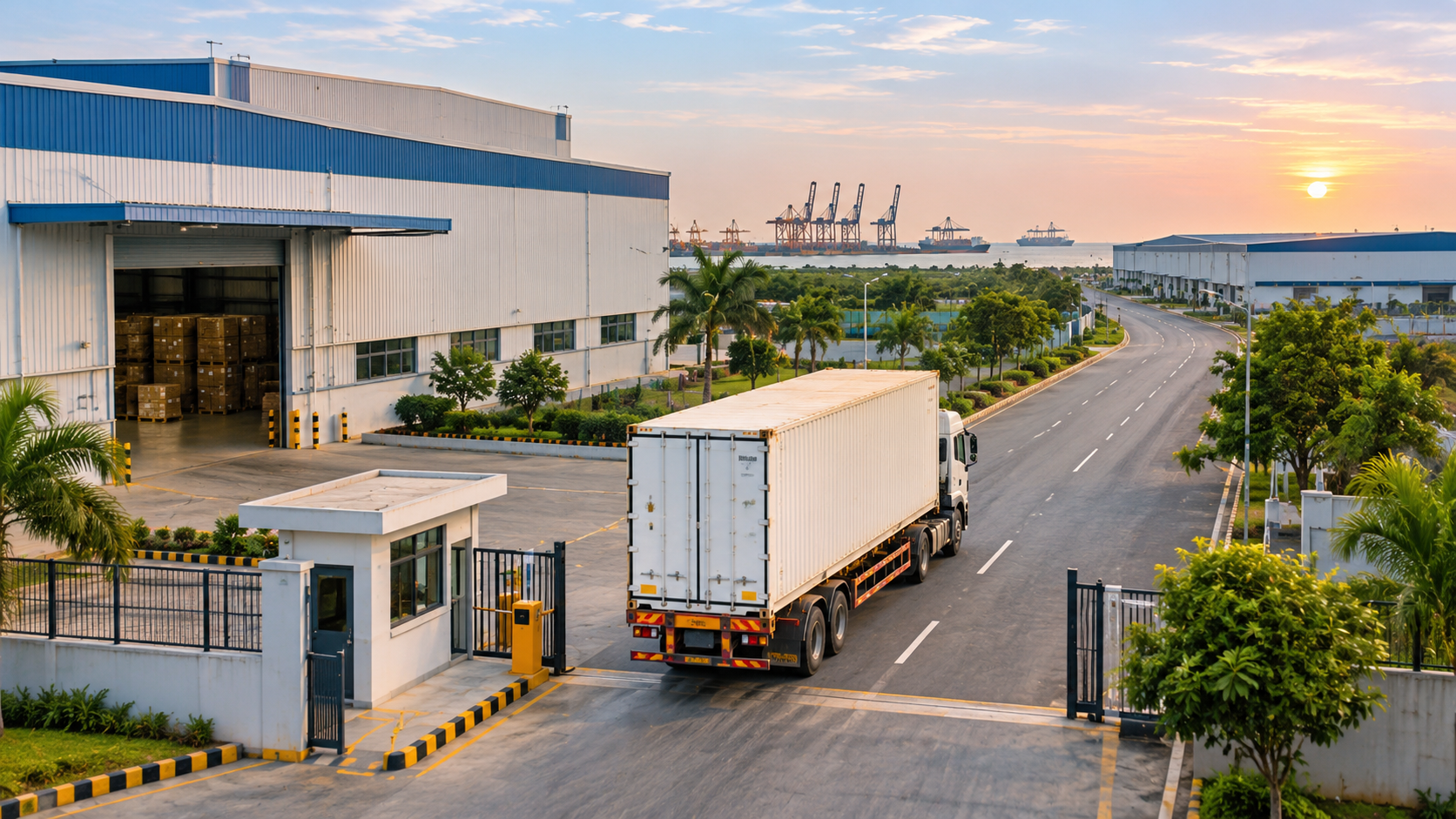
A zone to zone transfer moves goods from one free trade zone to another while they stay under customs control, so no import duty is triggered by the move. Here is how it works, when it makes sense, and what to plan before you do one.
Imagine you hold imported goods in one Free Trade and Warehousing Zone (FTWZ), and you need them in another. Maybe demand has shifted, maybe the second zone offers a service you need, or maybe you are gathering stock before a large export. Moving the goods across the Indian market would trigger customs duty. A zone to zone transfer avoids that, because the goods never enter the Domestic Tariff Area (DTA). This guide explains how it works in simple terms.
What is a zone to zone transfer?
A zone to zone transfer is the movement of goods from one special economic zone or FTWZ to another, under customs control. Because the goods stay inside the zone system, customs duty does not become payable just because the goods changed location. Duty only arises later, if and when the goods are cleared into India.
Our short guide to zone to zone transfer gives the basics. This article goes further into the planning side. If you are new to zones, start with What is an FTWZ.
Why move goods between zones?
Businesses usually move stock between zones for one of these reasons:
- Rebalancing stock. Moving goods closer to where demand is rising, or away from where it is falling.
- Reaching a specific service. Using a zone that can do labeling, repacking or other value-added work that your current zone cannot.
- Preparing a large export. Gathering inventory in one place ahead of a big re-export shipment.
- Changing provider. Shifting stock to a zone with better handling, location or terms.
How a zone to zone transfer works
- Agree the move with both zones. The zone that holds the goods and the zone that will receive them both need to be ready, and the receiving zone must be able to handle your goods.
- Prepare the permissions and documents. The transfer is recorded against the original import and warehousing records, so the paperwork needs to match.
- Move the goods under customs control. Movement normally happens through a customs-bonded arrangement, not ordinary domestic freight.
- Receive and record at the new zone. The new zone books the goods in against the same records, so the position carries over.
- Choose the next exit. From the new zone, goods can be re-exported, transferred again, or cleared into India.
The key point is that the records stay continuous. Your stock and duty position carry across, rather than starting again from zero. Exact forms and procedures depend on the goods and current rules, so always confirm the details for your shipment with your customs broker.
Transfer, re-export or DTA clearance: which is which?
These three exits are easy to mix up. Here is how they differ:
- Zone to zone transfer: the goods stay in bond and no duty is due on the move. You still need an exit later.
- Re-export: the goods leave India, and Indian import duty is not charged on them.
- DTA clearance: the goods enter the Indian market, and duty and applicable taxes are payable on the lot released. See Domestic Tariff Area Operations.
A transfer is therefore a way of moving the decision, not removing it. Goods will still need one of the other two exits eventually.
A simple example (illustrative)
An importer holds a consignment of components in one zone. A new customer overseas places a large order, and the importer wants to gather the stock in a zone that is closer to the export port and can repack the goods for shipping. A zone to zone transfer moves the goods there without triggering Indian duty. Once the goods are repacked, the importer re-exports them. No customs duty is paid on the move or on the re-exported goods. This example is for explanation only, and the details for a real shipment depend on the goods and the rules that apply.
What to plan before a transfer
- Confirm the receiving zone can handle your type of goods.
- Agree timings for approvals and documentation with both zones.
- Arrange bonded transport between the two facilities.
- Check that stock and duty records carry over correctly.
- Decide the next step for the goods: re-export, another transfer, or clearance into India.
Questions to ask your provider
- Which approvals and documents are needed for this move?
- Who arranges and insures the bonded transport?
- How are my stock and duty records kept continuous across the transfer?
- What are the full transport, handling and documentation charges?
- How quickly can the goods be released at the receiving zone?
How Yimpilo can help
Our FTWZ unit is in Ponneri, North Chennai, with 50,000+ sq ft and round-the-clock warehouse operations. If you want to bring stock into our unit from another zone, or move stock out of our unit to another zone, our team can help you plan the documents and the movement. Read more about our FTWZ warehouse operations and FTWZ vertical operations, or the unit's location in Chennai.
Frequently asked questions
Is customs duty paid on a zone to zone transfer?
No. The goods stay under customs control within the zone system, so the move itself does not trigger import duty. Duty arises only if the goods are later cleared into India.
Can I transfer only part of my stock?
Generally, yes. You can usually move a portion of the stock and leave the rest where it is. Confirm the process for your case.
Does the storage clock restart after a transfer?
The records carry across, so the position continues rather than resetting. The exact treatment depends on current rules, so confirm it with your customs broker.
What happens to the goods after the transfer?
They can be re-exported, transferred again, or cleared into India. Duty is payable only on goods cleared into India.
What to do next
If you are planning to move stock between zones, contact our team with your goods, quantities and timing, and we will help you work through the steps. You can also read our guide to duty deferment warehousing in India. This article is general information, not legal or customs advice.
Related reading
- How to Store Imported Goods in an FTWZ: A Step-by-Step Guide
- FTWZ vs SEZ: What Is the Difference and Which Do You Need?
- 7 Ways an FTWZ Improves Cash Flow for Importers in India