
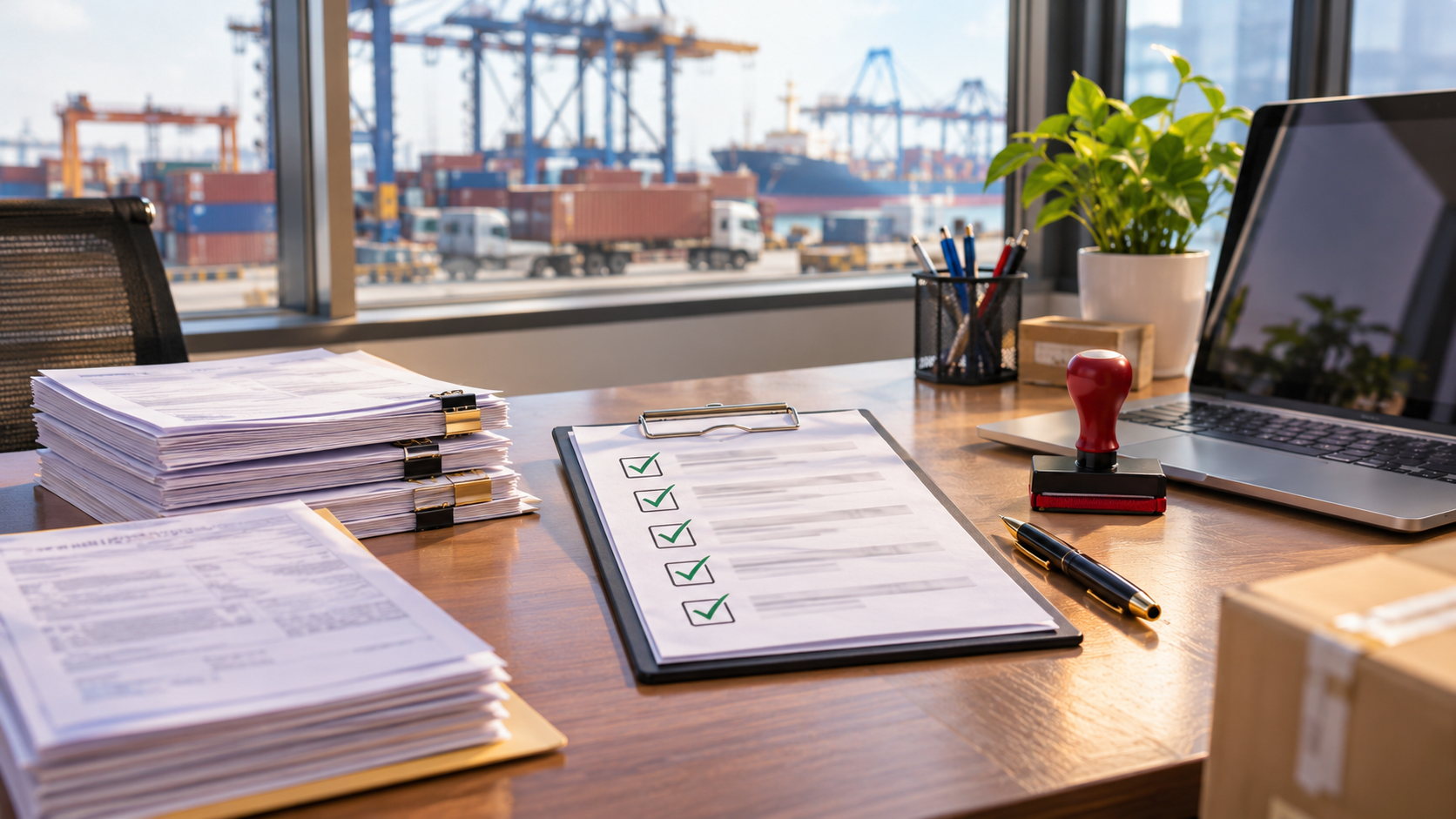
Most customs delays and penalties come from documents that are missing, incomplete or do not match the cargo. This checklist shows what to prepare before your first shipment reaches an FTWZ, and how to avoid the mistakes that cause problems.
Using a Free Trade and Warehousing Zone (FTWZ) can improve your cash flow and flexibility, but only if your paperwork is right. When documents are wrong, cargo can be held at the port, filings can be rejected, and extra charges can build up. The good news is that most of these problems are avoidable with a little preparation. This guide gives you a practical checklist, organized by stage, so you know what to get ready and when.
Why documents matter so much
Customs compares what the documents say with what the cargo actually is. If the invoice, the packing list and the shipping papers do not agree with each other, or with the goods, the shipment can be delayed or questioned. In a zone, the records also decide how and when duty is worked out later, so errors can follow your goods for a long time. Getting it right at the start saves both time and money.
If you are still choosing between options, our guide to FTWZ vs SEZ and our comparison of FTWZ vs bonded warehouse explain how each type of facility works.
The core documents most shipments need
The exact list depends on your goods and how they travel, but most shipments into an FTWZ involve the following:
- Commercial invoice. It should state the seller, the buyer, a clear description of the goods, the quantity, the unit price and the total value.
- Packing list. It should show how the goods are packed, with quantities and weights that match the invoice and the cargo.
- Bill of lading or airway bill. This is the transport document. For a zone, the shipment should name the FTWZ as the destination, so that duty is not paid at the port.
- Purchase order or contract. Useful to support the details on the invoice.
- Insurance details. Cargo insurance for the journey, where applicable.
- Importer details. Your company information and the registrations your business needs to import.
- Product details and classification. The customs classification (HS code) of each product, which affects how the goods are treated.
- Licences, permits or certificates. Some goods are restricted or controlled, and need extra approvals. Check this before you ship.
Because requirements vary, ask your customs broker or provider for the exact list for your goods. Our customs and compliance team prepares the filings that name the zone as the destination.
A stage-by-stage checklist
Before you ship
- Confirm that your goods can be stored in an FTWZ, and whether any approvals are needed.
- Agree with your supplier that the shipping documents will name the FTWZ as the destination.
- Check the classification of each product, and the value that will be declared.
- Decide the plan for the goods: re-export, sale in India, or both.
When the goods are on the way
- Get copies of the invoice, packing list and transport document, and check that they agree with each other.
- Share them with your provider early, so filings can be prepared before the cargo arrives.
- Confirm the expected arrival date and the port, so transport to the zone can be planned.
When the cargo arrives
- Make sure the cargo moves from the port to the zone under customs control.
- Check the goods against the documents when they are received, and report any difference straight away.
When the goods leave the zone
- For re-export, prepare the export documents for the destination country.
- For sale in India, prepare the customs filings and duty payment for the lot you are clearing. See Domestic Tariff Area Operations.
- For a move to another zone, prepare the transfer documents. See zone to zone transfer.
The most common document mistakes
- Mismatched quantities or descriptions. The invoice says one thing, the packing list another.
- The zone is not named as the destination. The cargo is then treated as a normal import and duty may be demanded at the port.
- Wrong or vague product classification. This can change the duty and lead to questions later.
- Missing licences or permits. Restricted goods without approval can be held.
- Late sharing of documents. Filings take time, and rushing them leads to errors.
- Changes after shipping. Editing documents after the cargo has left can cause mismatches.
How to choose a provider that helps you avoid delays
People often ask which providers help minimise customs delays and penalties. No provider can remove all risk, but a good one will:
- Tell you exactly what documents are needed, and by when.
- Check your documents against each other before the cargo arrives.
- Prepare the zone filings in-house, rather than passing them around.
- Keep clear stock and duty records for every consignment.
- Explain the next steps and costs before they happen.
At Yimpilo, our compliance team handles these steps for clients at our Ponneri unit in Chennai. Read more about our FTWZ warehouse operations and FTWZ in Chennai.
Frequently asked questions
Which documents do I need before my first FTWZ shipment?
Most shipments need a commercial invoice, a packing list, a transport document that names the FTWZ, and product classification details. Some goods also need licences or certificates. Confirm the list for your goods with your broker or provider.
Why must the shipping documents name the FTWZ?
So the cargo moves from the port to the zone without duty being paid at the port. If the zone is not named, the shipment can be treated as an ordinary import.
What happens if my documents do not match?
Customs may hold or question the shipment, which can cause delays and extra charges. Check that the invoice, packing list and transport document agree before the cargo ships.
Can you prepare the filings for me?
Yes. Our in-house team prepares the customs filings for clients. We need your documents early, so please share them as soon as they are available.
What to do next
If you are preparing your first shipment, contact our team with your goods and your documents, and we will tell you what else is needed. You can also read our guide to duty deferment warehousing in India to understand how duty works once goods are in the zone. This article is general information, and requirements change, so please confirm the details with your customs broker or our experts.
Related reading
- How to Store Imported Goods in an FTWZ: A Step-by-Step Guide
- Is an FTWZ Right for Your Business? 5 Questions to Ask
- FTWZ in Chennai: Why Ponneri Is a Smart Location for Importers