An FTWZ lets traders import goods, store and prepare them, and send them on to other countries without paying Indian import duty on the re-exported goods. Here is how re-export through an FTWZ works, step by step, with an example and a planning checklist.
If you trade goods between countries, India can be a useful hub, but only if you do not pay import duty on goods that are just passing through. A Free Trade and Warehousing Zone (FTWZ) is designed for exactly this. Goods come into the zone, are stored and prepared, and then leave for another country. This guide explains how re-export through an FTWZ works in practical terms, and what to plan before you start.
What is re-export?
Re-export means importing goods into one country and then sending them on to another, without selling them in the first country. For a trader based in or working through India, it means bringing goods into the country, holding them, and shipping them out again to customers elsewhere. Without a zone, the goods would be treated as imports and duty could be due on arrival, even though the goods never enter the Indian market.
Why use an FTWZ for re-export?
- No Indian import duty on re-exported goods. Goods that leave the zone for another country are not charged Indian import duty. See our guide to duty deferment warehousing in India.
- Cash flow. Money is not locked up in duty while the goods wait for the next customer.
- Preparation close to the port. Goods can be labeled, kitted or repacked in the zone before they ship out.
- Flexibility. You can decide later whether some of the stock should be cleared into India instead.
- Consolidation. You can combine goods from several suppliers into fewer shipments. See multiple country consolidation.
How re-export through an FTWZ works
- The goods are shipped to the zone. The shipping documents name the FTWZ as the destination, so duty is not paid at the port.
- The goods are received and recorded. They are checked against the documents and entered into the stock records.
- The goods are stored. They wait in the zone until a customer or shipment is ready.
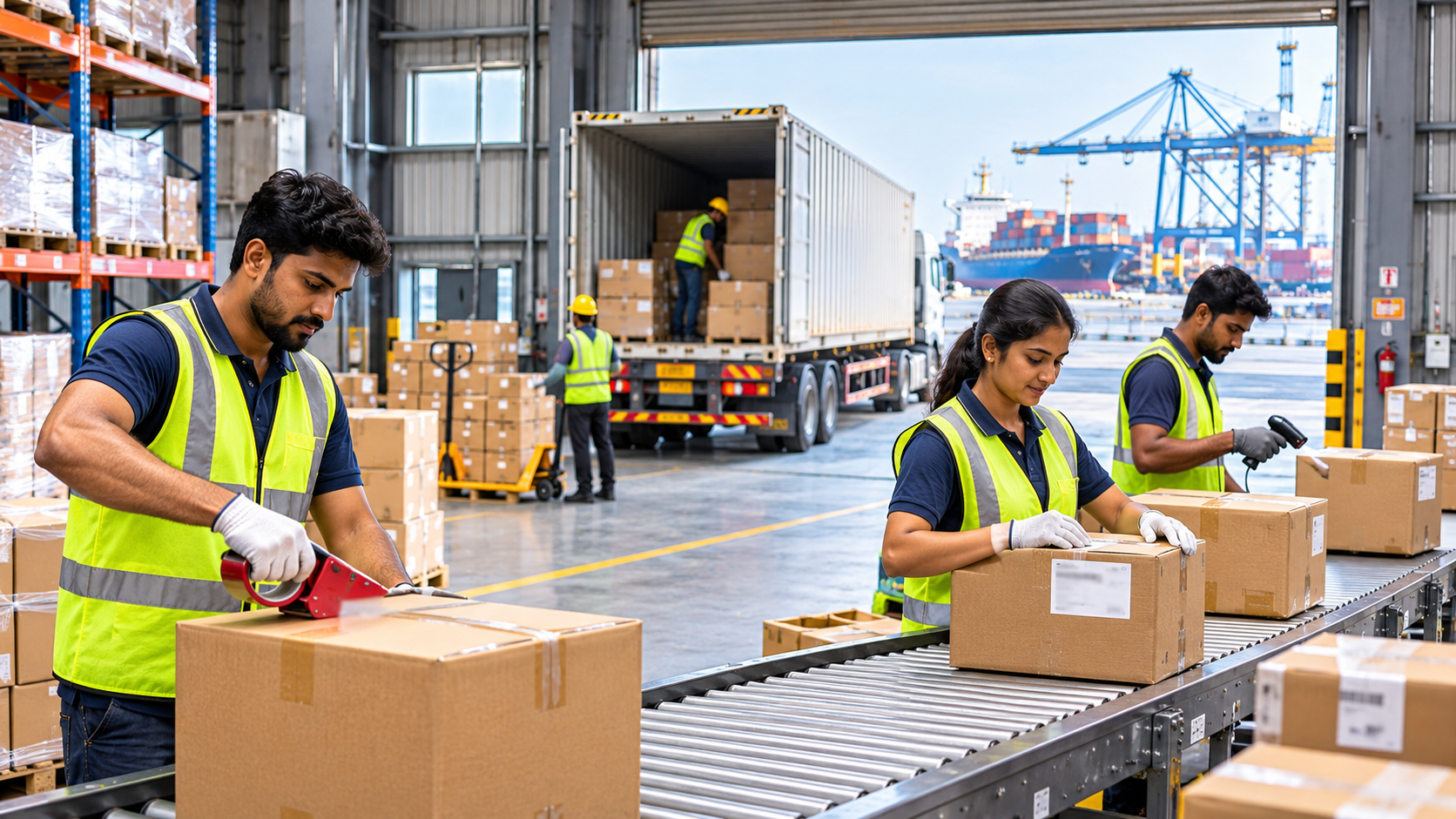
- The goods are prepared. Labeling, repacking or kitting can be done in the zone to suit the destination.
- The export is arranged. The export documents are prepared for the destination country, and the goods are moved to the port.
- The goods leave India. No Indian import duty is charged on goods that are re-exported.
The practical steps of the storage stage are covered in How to Store Imported Goods in an FTWZ.
An example from our case studies
One of our case studies shows a re-export operation for automotive components. In that case, 60 containers were stored in the zone, with an average inventory holding period of 45 days, and 42 containers were then re-exported to customers in Singapore, Malaysia and the United Arab Emirates. Domestic customs duty is avoided on re-exported goods, subject to applicable customs and SEZ rules and the supporting export documents. The figures in our case studies are for reference and illustration only, so please read the full details on our case studies page.
Planning checklist for traders
- Know your goods. Confirm that they can be stored and exported, and whether any permits are needed.
- Know your destination rules. Each country has its own import rules, labeling needs and documents.
- Plan the holding period. Estimate how long goods will wait before they ship. Storage conditions and time limits are set by regulation, so confirm what applies.
- Prepare the documents early. Invoices, packing lists and export paperwork need to match the cargo. See our FTWZ documents checklist.
- Keep a fallback. If a customer cancels, you may want to clear the goods into India instead. Duty then becomes payable on that lot. See Domestic Tariff Area Operations.
Re-export, cross trade and zone to zone transfer
These terms are easy to confuse:
- Re-export sends goods that were imported into the zone on to another country.
- Cross trade is a sale between two foreign parties, where the goods may be routed through India without entering the Indian market. See cross trade operations.
- Zone to zone transfer moves goods from one zone to another before an exit. See zone to zone transfer.
Common mistakes to avoid
- Not planning the export documents until the last minute.
- Assuming every product can be labeled or repacked in the zone without checking.
- Forgetting the destination country's import rules.
- Letting stock sit with no plan for the exit.
- Mixing up re-exported goods with goods cleared into India in the records.
How Yimpilo can help
Our FTWZ unit is in Ponneri, North Chennai, with 50,000+ sq ft, round-the-clock warehouse operations, and close access to Kattupalli, Ennore and Chennai ports. We store goods, handle value-added services such as labeling and repacking, and prepare the customs filings for re-export. Read more about our FTWZ vertical operations, our FTWZ warehouse operations and our customs and compliance support.
Frequently asked questions
Do I pay Indian import duty on goods I re-export?
Indian import duty is not charged on goods that are re-exported from the zone, subject to applicable rules and supporting export documentation. Confirm the details for your goods with your customs broker.
Can I label or repack goods before I re-export them?
Often, yes. Light processing such as labeling, kitting and repacking is commonly done in a zone. Confirm what is allowed for your goods.
What if I decide to sell some of the goods in India instead?
You can clear that part into the Domestic Tariff Area, and duty and applicable taxes are payable on the lot released. The rest can still be re-exported.
Which countries can I re-export to?
It depends on your goods and on the rules of each destination country. In our case study, the goods went to Singapore, Malaysia and the United Arab Emirates.
What to do next
If you trade goods between countries and want to explore re-export, contact our team with your goods, volumes and destinations. You can also read our FTWZ overview first. This article is general information, not legal or customs advice, so confirm the details for your shipment with your customs broker or our experts.
Related reading
- 7 Ways an FTWZ Improves Cash Flow for Importers in India
- Is an FTWZ Right for Your Business? 5 Questions to Ask
- FTWZ vs SEZ: What Is the Difference and Which Do You Need?